Choosing between a historic home and a new build in the Afton Oaks and River Oaks area is rarely just about age. You are usually deciding between two very different living experiences: one rooted in architectural legacy and established streetscapes, and another shaped by modern layouts, newer systems, and current design preferences. If you are weighing both, this guide will help you compare what matters most so you can make a more confident decision. Let’s dive in.
Why River Oaks and Afton Oaks Feel Different
River Oaks and Afton Oaks sit close to each other in Houston’s inner loop, but their housing stories began in different decades. River Oaks was developed in the 1920s as Houston’s first master-planned community across about 1,100 acres, with landscaped homesites, underground utilities, esplanades, and strong deed controls.
Afton Oaks came later, founded in 1951, and is described as an approximately 525-home deed-restricted neighborhood. Its housing mix includes large lots, updated ranch-style homes, and a growing number of new construction homes. That difference in origin still shapes what you see and what you can do with a property today.
In both neighborhoods, private rules remain part of ownership. River Oaks properties are governed by deed restrictions and current policies, while Afton Oaks requires Architectural Review Committee approval for exterior additions, renovations, and new construction before permitting. For buyers, that means the home, the lot, and the neighborhood rules all matter together.
What Historic Charm Looks Like
River Oaks architecture stands out
One of the biggest draws of older River Oaks homes is their architectural range. City landmark reports document styles including Colonial Revival, Southern Colonial, Georgian, Tudor, Dutch Colonial, Mediterranean, Norman, and Latin Colonial.
That variety gives the neighborhood much of its appeal. When you buy a historic home here, you are often buying distinctive design, period details, and a sense of place that newer construction may try to echo but cannot fully replicate.
Streetscapes feel more established
The original River Oaks plan shaped more than individual homes. It also created a setting with mature trees, established streets, and lot layouts that often feel more layered and organic than newer developments.
That character can be a major advantage if you value privacy, landscaping, and a neighborhood with visual depth. At the same time, older lot geometry can make future changes more complex, especially if you are thinking about expanding the footprint, adjusting parking, or altering the front elevation.
Floor plans may feel more formal
Historic homes often follow the design patterns of their era. In practical terms, that can mean defined entries, separate living and dining rooms, and less open flow than many buyers expect in contemporary construction.
That is not a drawback for everyone. If you like rooms with clear purpose, architectural detailing, and a more traditional layout, a historic River Oaks home may feel more intentional and refined.
What New Builds Offer
New construction is part of the market
New construction is no longer a niche conversation in River Oaks and Afton Oaks. Afton Oaks has described itself as undergoing enormous change as many smaller older homes are replaced, and River Oaks continues to review new construction and major renovations through its architectural process.
For buyers, this means you are likely to see both preserved homes and newly built options on the same search. In some cases, they may even sit on the same street while offering very different lifestyles.
Style is broader than many buyers expect
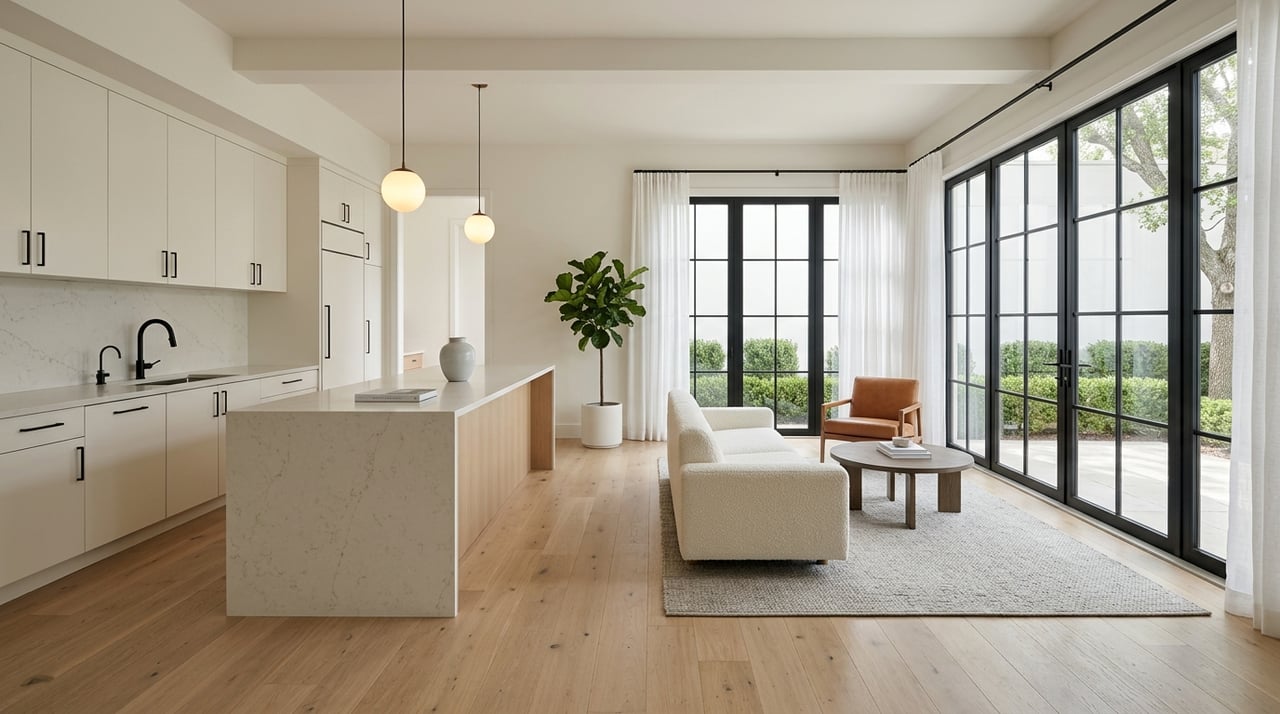
A new build in this area does not point to one specific look. Some newer homes lean modern with open floor plans and large window walls, while others take a more traditional or old-world direction, including French country or new traditional designs.
That range matters because it gives you more flexibility. If you want current construction without a stark contemporary style, you may still find a home that feels timeless rather than trendy.
Layouts tend to suit modern living
Function is often the biggest reason buyers choose a newer home. Newer homes typically appeal to people who want larger kitchens, flexible circulation, bigger windows, guest suites, bonus rooms, or home-office-friendly layouts.
If you prefer move-in-ready living with fewer near-term system concerns, a new build may check more boxes. You may also find that the overall flow feels easier for entertaining, working from home, or adapting to changing household needs.
The Lot Matters More Than You Think
One of the most important truths in both River Oaks and Afton Oaks is that the lot can shape your options as much as the house itself. In River Oaks, setbacks and impermeable surface limits are tied to lot size, and in Afton Oaks, deed restrictions limit occupancy to one single-family residence per lot.
That means a larger-looking property does not always translate into unlimited flexibility. Before you fall in love with a floor plan or exterior style, it is smart to understand what part of the lot is truly usable and what future changes may be limited by neighborhood rules.
Questions to ask about the site
- How much of the lot is affected by setbacks?
- Are there limits tied to lot size or surface coverage?
- Will driveway needs reduce usable outdoor space?
- Could exterior additions or major changes require neighborhood approval?
- Does the lot shape affect future expansion plans?
These questions matter whether you are buying a classic estate or a newly built home. In this market, the house and the site should always be evaluated together.
Preservation Rules Can Affect Historic Homes
Some River Oaks properties are individually recognized by the City of Houston as Landmarks or Protected Landmarks. If that applies to a home you are considering, certain exterior work may require a Certificate of Appropriateness.
Ordinary maintenance can be exempt, but visible exterior alterations may need to preserve character-defining elements such as roof shape, windows, porches, and exterior materials. For buyers, the practical takeaway is simple: historic appeal can come with added review when you want to make visible changes.
This does not make a historic purchase less attractive. It just means you should go in with clear expectations about what can be changed easily and what may require more planning.
Maintenance and Ownership Costs
Older homes may need more attention
The maintenance conversation is not just about age. It is also about how much of the home is original, how it has been updated over time, and whether exterior work is subject to preservation or neighborhood review.
Older River Oaks homes may require more attention to windows, roofs, masonry, or mechanical systems. That can be worth it for buyers who value legacy architecture, but it should be part of your budgeting from the start.
Newer homes may reduce short-term repairs
New construction often lowers the chance of immediate repair needs because major systems are newer. That can create a smoother first few years of ownership, especially if you want a lower-maintenance move.
Still, newer does not mean unrestricted. You may gain efficiency and convenience, but you may also give up some mature landscaping, lot depth, or architectural continuity compared with older homes nearby.
Community fees belong in the budget
Ownership costs in these neighborhoods extend beyond the property itself. In River Oaks, annual maintenance fees are assessed by lot square footage rather than home size, and services include garbage and recycling pickup plus parks maintenance.
In Afton Oaks, 2026 dues are $1,090 and fund patrol, garbage and recycling, esplanade maintenance, and deed-restriction enforcement. These costs do not cover personal home or yard repairs, street or sewer repairs, or debris removal, so they should be viewed as part of your ongoing community budget rather than a substitute for home maintenance.
Flood Readiness Should Be Verified by Address
In a bayou-adjacent area like River Oaks, flood readiness should be reviewed property by property. Harris County’s Flood Education Mapping Tool provides updated FEMA floodplain information for addresses in the county.
This is especially important when comparing two homes that may seem similar on paper. A historic home and a new build on the same street may not share the same mapped floodplain relationship, so it is worth verifying each address directly.
Which Option Fits Your Priorities?
The right choice usually comes down to what you value most in daily living. Historic homes in River Oaks often appeal to buyers who want architectural pedigree, mature streetscapes, and a stronger sense of neighborhood continuity.
Newer homes often appeal to buyers who prioritize open layouts, flexible rooms, and lower short-term maintenance. Neither path is automatically better. The better fit is the one that aligns with how you want to live, maintain, and use the property over time.
Historic home may fit you if you value
- Distinctive architecture
- Established trees and streetscapes
- Traditional room separation
- Period details and legacy character
- A home with a strong sense of history
New build may fit you if you value
- Open-plan living
- Newer systems and finishes
- Flexible work or guest spaces
- Larger windows and more modern light flow
- A more turnkey move-in experience
A Smart Way to Compare Homes Here
When you tour homes in River Oaks and Afton Oaks, try to compare more than the finish level. A beautiful historic home and a polished new build can both impress at first glance, but the better decision often comes from looking at restrictions, lot usability, maintenance expectations, and long-term fit.
That is where local guidance becomes especially valuable. In a neighborhood where design, rules, and resale positioning all matter, a clear plan helps you evaluate not just what looks good today, but what will continue to work for you in the years ahead.
If you are weighing a historic home against a new build in the Afton Oaks and River Oaks area, Kasteena Parikh can help you compare the details that matter most and navigate the decision with a design-savvy, project-managed approach.
FAQs
What is the main difference between historic homes and new builds in River Oaks?
- Historic homes typically offer architectural character, established streetscapes, and more traditional layouts, while new builds often offer open floor plans, newer systems, and more flexible living spaces.
What should buyers know about deed restrictions in Afton Oaks and River Oaks?
- Both neighborhoods have private rules that can affect additions, renovations, new construction, setbacks, and how a lot can be used, so reviewing the property and lot restrictions is an important step before buying.
How do landmark rules affect River Oaks historic homes?
- Some River Oaks homes are designated as Landmarks or Protected Landmarks, and certain exterior changes may require City of Houston review to preserve character-defining features.
Are new builds common in Afton Oaks and River Oaks?
- Yes. New construction is an active part of both neighborhoods, especially in Afton Oaks where older homes have increasingly been replaced by newly built homes.
Why does lot size and shape matter in River Oaks and Afton Oaks?
- Lot size and shape can affect setbacks, surface coverage limits, driveway placement, outdoor usability, and future expansion options, which can be just as important as the house itself.
How should buyers check floodplain information in the River Oaks area?
- Buyers should verify each property by address using Harris County’s flood mapping resources rather than assume nearby homes share the same floodplain relationship.